
This month, Konsensus interviews Founder and CIO at Signum Asset Management Ltd, Ari Aaltonen about the inspiration for his new book: Gold, Code, and Command.
As a 24-year-old economist at the Bank of Finland, you made calculations on grid paper during an operation to compensate commercial banks. What was it like being in the room during that moment, and how did it shatter your illusions about central banking?
"It was bewildering to see the Governor of the central bank so rattled and at a loss. What puzzled me the most was his deep concern over the profitability of commercial banks. Back then, there was no severe banking crisis like the ones we have witnessed in the 21st century, nor was the solvency of the banks under threat."
You argue that this specific, secretive compensation was the true trigger for the massive Finnish credit boom and the devastating 1990s depression. Why do you think this perspective has been overlooked in mainstream economic history for four decades?
"In my view, that was the opening act of the credit boom and the subsequent depression. It triggered moral hazard among the banks, as the central bank stepped in to bail them out over such a minor profitability issue—and did so at the banks' own request. This mistake has been largely overlooked by economists and the financial media."
What motivated you to finally pull back the curtain and write this book now, in 2026?
"Over 40 years have passed since the event, non-disclosure periods and other time limits have now expired, and many of those involved have already passed away. I didn't want to offend anyone personally. However, the matter has weighed on my mind because, even back in 1986, I considered it significant. The Finnish people suffered greatly during the 1990s depression, and they have a right to know this part of the story as well."
Did your time working deeply within the system make you more cynical about state-run monetary policy, or did it simply make you a pragmatist?
"Working both at the central bank and within a banking group that was gripped and ultimately destroyed by the depression showed me that the level of competence inside these institutions is not as strong as the public image suggests. Instead of becoming cynical, I began focusing more on my own life. That is why I moved into the wealth management business in 1997, having previously served as the chief economist of another bank, the state-owned Postipankki."
How do you define "Command" in the context of modern fiat currencies?
"First and foremost, 'Command' is the exercise of power by the state and the central bank, rooted in the authority granted to them by legislation. However, Command also encompasses private-sector actors—such as major banks and stock exchanges—that hold significant control over how financial markets operate, how payment flows and capital are directed, and who gets to participate in these markets, for instance by acting as payment processors or central securities depositories."
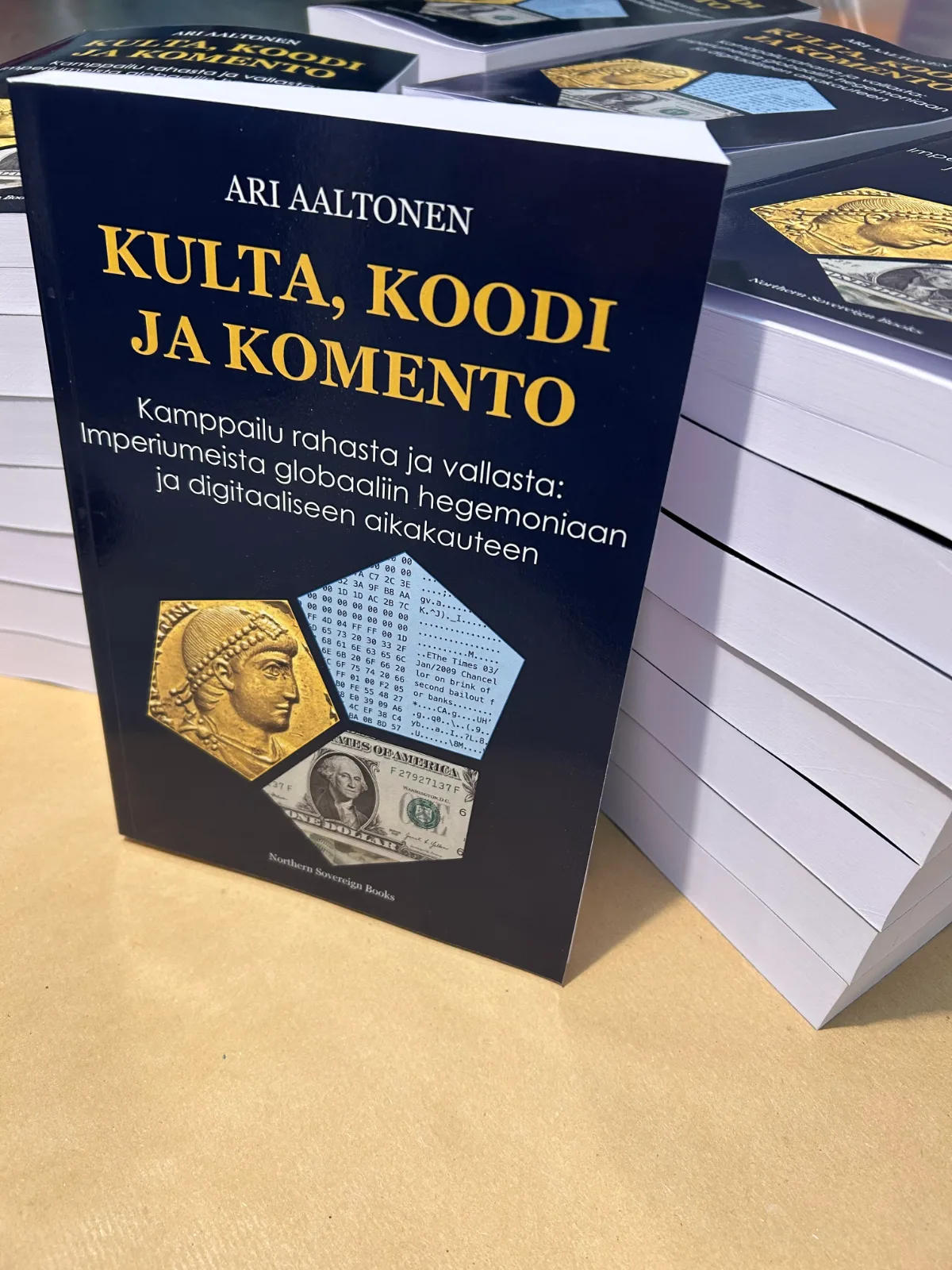
You describe gold as history’s ultimate safe haven. In an increasingly digital world, why does a physical metal still carry such immense geopolitical weight for central banks today?
"Gold's position is strong because it has traditionally been the supreme commodity money. The gold standard has been the best-functioning monetary system since antiquity, reaching its peak in the 19th century and again after World War II under the Bretton Woods system. Fundamentally, gold is humanity's timeless money; it will never disappear from our cultures. Furthermore, from a geopolitical perspective, physical gold carries no counterparty risk when the bullion is safely stored in a vault in your own capital city. In contrast, paper-based securities carry the risk that a foreign custodian could freeze your assets and shut down your accounts."
"Code" represents decentralized monetary networks like Bitcoin. Do you see "Code" as a complementary asset to gold, or do you view it as its inevitable successor in the fight against state control?
"In my view, both gold and Bitcoin have their place in future monetary systems. Rather than being 'at war' with each other, they are complementary. Both represent commodity money, yet they carry different risks. Gold's primary risk relates to physical custody, as RWA tokenization has already made it modern and liquid once again—with Switzerland and Singapore likely emerging as the winners in this space. Bitcoin's risk, on the other hand, lies with its developer community and the choices it makes—specifically, how the network evolves as a monetary system. Bitcoin is not a monolith, and disputes over its direction, such as the Blocksize War and BIP-110, demonstrate that it is still in a developmental phase. There is room for both, and both serve as a vital counterweight to state-issued fiat money."
Can you explain how "Command" systems actively try to regulate or suppress "Code" to maintain their monopoly on power?
"State 'Command' and financial regulatory authorities have created significant restrictions and barriers to using 'Code' as money and for payment processing. Every country has taken its own approach—some more favorable, others highly restrictive toward how 'Code' operates. Taxation is also used to shackle 'Code' by requiring capital gains calculations for the tax authorities on every single payment, no matter how small. Furthermore, numerous countries are actively developing Central Bank Digital Currencies (CBDCs) to compete for the architecture of the future monetary system, while simultaneously attempting to restrict or even ban private stablecoins."
Of these three forces—Gold, Code, and Command—which one do you believe currently has the upper hand, and which one is the most fundamentally fragile?
"Certainly, 'Command' currently holds the upper hand among the three. However, its power is waning due to the structural flaws of the fiat monetary system and the rise of the information society replacing old industrial-era hierarchies. The transformation of money is just one part of this broader process. The information society has advanced most rapidly in media and communications: 'Command' no longer controls what information and opinions can be shared, on what topics, or by whom. Gold's resurgence has largely been driven by geopolitics and the decline of Western post-Cold War dominance. Meanwhile, 'Code' has risen alongside technological advancements—particularly blockchain technology and information networks—and artificial intelligence will accelerate this trend next. 'Command' is weakening, though it will never disappear entirely. There is also 'good Command' and well-functioning models, such as Switzerland and Singapore."
What historical precedents of failing empires should we be paying the closest attention to right now?
"I would look closely at how the British Empire faded, and what happened to the British pound when the United States and the dollar displaced it. Likewise, the empire of Charles V in the early 16th century and the weakening of the Catholic Church's power serve as valuable lessons for the Western liberal worldview that nothing lasts forever."
We are currently witnessing a global trend of de-dollarization and massive gold hoarding by Eastern central banks. How does this dynamic accelerate the shift from "Empires to Global Hegemony"?
"In fact, the buildup of gold reserves isn't limited to just a few 'Eastern' central banks; it is a broader trend across dozens of countries, especially when you account for their relative size. For these nations, it is the quickest and easiest way to increase their independence from Western 'Command'—simply convert reserves into gold and repatriate it to your own vaults. This shift, combined with advancements in gold custody such as RWA tokenization, also provides strong support for private investors and corporations in the West to incorporate gold into their wealth alongside fiat money."
If the current fiat hegemon (the US Dollar) continues to weaken, do you foresee a chaotic, multipolar currency world, or will a new, single dominant system take its place?
"If the dollar's position weakens, the first to suffer will be the weakest fiat currencies tied to it. Troubles will begin in emerging economies, while Western currencies like the British pound or the Canadian dollar would crack before the US dollar itself. The euro's position is also precarious, as it is not backed by a real sovereign state—only bickering, impoverishing nations lacking global relevance. Meanwhile, the Chinese yuan is not freely convertible and still has a long way to go before becoming a new reserve currency. If you want a prediction, digitized gold is currently in the strongest position to become the global reserve currency during a period of chaos. Bitcoin is also a candidate, though it still lacks the kind of sovereign backing that a reserve currency requires."
From your perspective as an investment professional, how should everyday people be positioning themselves to protect their purchasing power during this clash between state fiat, physical gold, and decentralized tech?
"Focus on proper diversification. Also, pay close attention to how the digitalization of money or an asset is executed, and how its usability and custody are secured. As such, I don't want to give 'investment advice,' because everyone must first evaluate their own personal situation, country of residence, goals, and risk tolerance—either on their own or together with a professional financial advisor."
If you could sit down with your 24-year-old self back in 1986, knowing everything you know now about how global finance operates, what advice would you give him?
"I would give him this advice: Don't buy into the fearmongering narratives of the industrial era. All the doomsday fears pushed in the 1980s—environmental collapse, climate alarmism, overpopulation, a plummeting standard of living, and the constant fearmongering over wars and nuclear annihilation—have proven to be false. The world is heading toward a better future, and freedom will ultimately prevail."
What is the single most important takeaway you hope readers get from reading Gold, Code, and Command?
"Money is not what you think it is. It has constantly evolved throughout history, and we are now living through an era where the transformation of money is once again particularly powerful. Money is tied to power, yet state power is ultimately unable to control it. Commodity money—such as gold and Bitcoin—is making a comeback as the information society displaces industrial-era hierarchies."
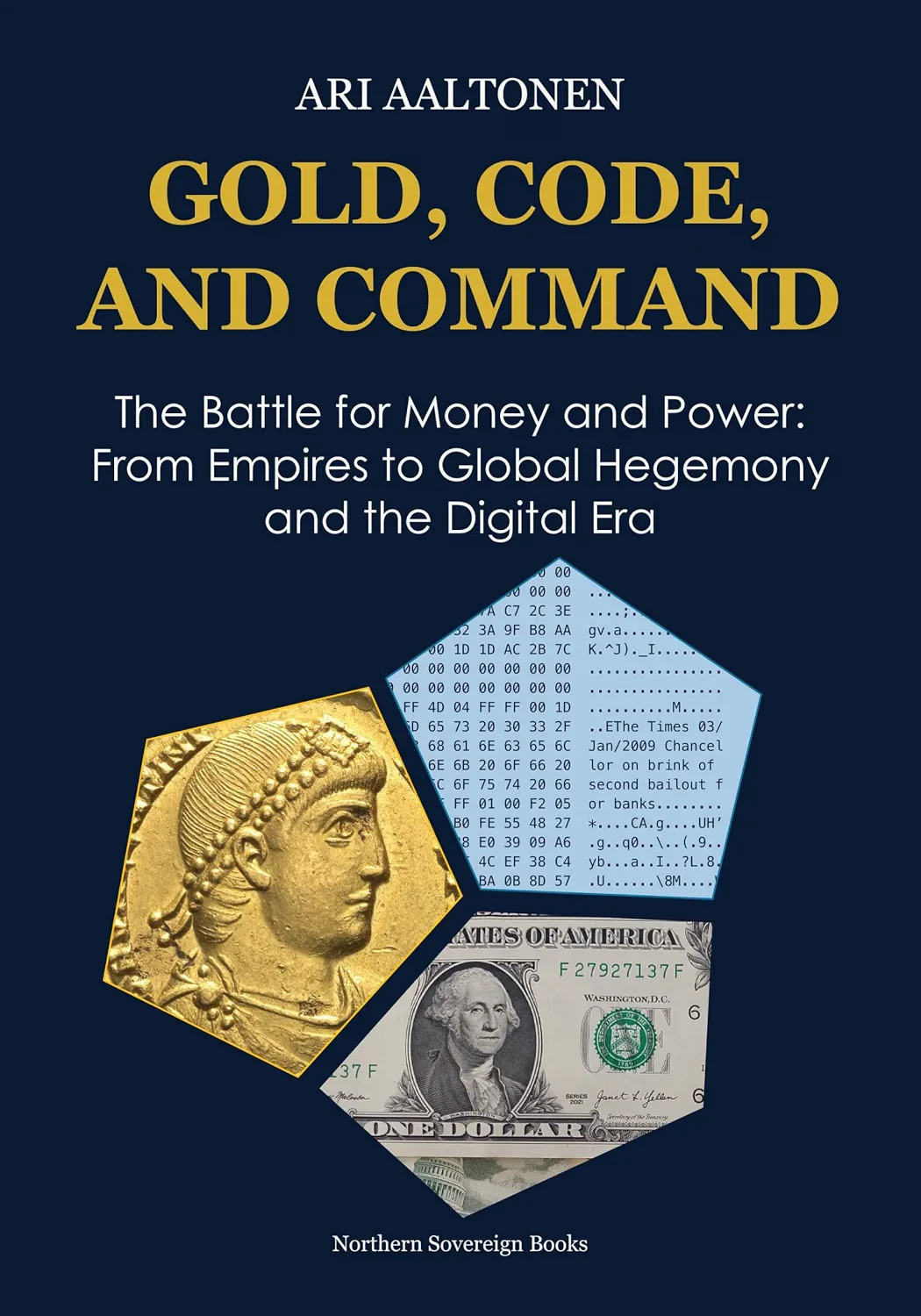
Aaltonen’s book examines current geopolitical reality. Global powers are actively shifting away from the US Dollar, and inflation continues its silent confiscation of purchasing power. The tension between state control, physical commodities, and decentralized code dictates where capital will survive in the coming decades.
Buy Gold, Code, and Command in our shop here.