










































































Introduction
Bitcoin is often portrayed in mainstream media as a payment system. In my opinion, this is a misrepresentation of Bitcoin's essence. Satoshi Nakamoto indeed gifted us a new form of digital cash that can be used for transactions. However, this overlooks another critical aspect of Bitcoin: by eliminating intermediaries in the organization of our currency, Bitcoin primarily signifies an innovation in our societal scalability.
In our history, it has never been possible to instantly transfer value between entities in different corners of the globe without relying on a trusted intermediary, such as a bank or government. However, in 2008, someone under the pseudonym 'Satoshi Nakamoto' published a nine-page solution to a longstanding computer problem. Nakamoto's consensus and the computer protocol (Bitcoin) that he developed and published, allowed us for the first time, to send value over the internet with minimal trust required.
A peer-to-peer version of electronic money allows for online payments to be made from one party to another without a financial institution's involvement. Digital signatures provide part of the solution, but the primary benefits are lost if a trusted third party is still required to prevent double spending. We propose a solution to this issue using a peer-to-peer network. This network timestamps transactions by hashing them into an ongoing chain of proof-of-work, thus creating a record that cannot be changed without redoing the proof-of-work.
"Satoshi Nakamoto - Bitcoin: A Peer-to-Peer Digital Currency System (October 31, 2008)"
In our current monetary system, we're significantly vulnerable to the actions of others. The far-reaching centralization of our money production - central banks creating free reserves that allow banks to distribute money in the form of loans - paired with the centralization in our payment systems means that our money isn't resistant to depreciation, and our payments aren't immune to censorship. Bitcoin isn't just a technological advancement to enhance payments, it represents a monetary revolution.
The advent of Bitcoin has presented us, as investors, with a new scarce digital asset - bitcoins. These are tradable tokens created on the Bitcoin network through a process known as 'mining'. The production of new bitcoins bears similarity to the extraction of gold, as both processes consume time and energy. However, a key difference is that, unlike gold production, the generation of new bitcoins follows a predictable trajectory. The universally accepted algorithm, enforced by many, restricts the total quantity of tokens to a cap of 21 million (of which over 18 million have already been mined as of today). Every four years, the number of new bitcoins that can be mined is halved until the production will eventually cease completely by the year 2140.
Today, miners can mine approximately 12.5 bitcoins every 10 minutes, which translates to 1,800 new bitcoins being produced each day. The next halving is projected to take place in early May 2020. At that point, only 6.25 bitcoins will be produced every 10 minutes, reducing the rate of new bitcoins mined each day to a daily total of 900. As it stands now, about 18.2 million bitcoins have been mined out of the total 21 million, which equates to a little over 87%.
[Bitcoin Issuance] Figure 1: The issuance schedule of Bitcoins. Currently, 12.5 BTC are mined every 10 minutes as a so-called coinbase reward. Starting from block height 630,000, this will decrease to 6.25 BTC every 10 minutes. This in turn, will effectively halve the annual inflation from 3.6% to 1.8%. At present, 18.2 million Bitcoins have already been mined. (Source: Github bashco)
Bitcoins are not backed by any physical asset, nor are they guaranteed by any government or a company's cash flow. So, the question arises: why does this new internet currency have any value at all? Bitcoins fall into an entirely different category of goods, their value determined by game theory mechanics. Each market participant values it based on their estimation of how other participants will value it. To comprehend this game-theoretical nature of monetary goods, we need to delve into the origins of money.
De oorsprong van geld
The Origin of Money
We can imagine that in the earliest human societies, primitive trade took place between groups of people through bartering. This must have been a tremendously inefficient method of exchange that significantly limited the scale and geographical reach of trade. One major drawback of direct exchange is the necessity for a perfect alignment of needs—commonly referred to as the "double coincidence of wants" problem. For instance, a person with apples could trade with a fisherman, but if the fisherman is not in need of apples at that time, no exchange can occur. Over time, we learned that there was benefit in accumulating certain collectibles due to their rarity or symbolic value, such as shells, animal teeth, or stone tools. In his essay on the origins of money, Nick Szabo argued that our fascination with collecting such items provided us an evolutionary advantage over our nearest biological competitors. Today, we stand as the only remaining human species.
The primary and ultimate evolutionary function of collectibles was to serve as a medium for storing and transferring value.
Nick Szabo (2002): Shelling Out - The Origins of Money
Collectibles served as a sort of proto-currency, facilitating trade between typically hostile tribes and enabling wealth to be transferred across generations. Fundamentally, money is a technology that minimizes conflict and reduces the need for trust. Trading and transfers involving collectibles were fairly uncommon in early societies. More often, these goods were used as a store of value rather than a medium of exchange.
Compared to modern money, primitive forms of currency had a lower velocity, only being traded perhaps a few times in an individual's lifetime. However, a durable collectible, which we might nowadays call a heirloom, could last for many generations, adding value with every transfer.
Nick Szabo (2002): Shelling Out - Tracing the Roots of Money
Early humans faced a significant game-theoretical dilemma when they collected or crafted items: which objects would others desire? By accurately predicting which goods would be in demand for their collectible value, the owners of these items gained a substantial advantage. It increased their prospects of successful trading and wealth accumulation. It's important to note that the earlier someone anticipates a future demand for a good, the bigger the advantage for the owner. They can acquire it more cheaply than when the item becomes generally desired, and its trade value escalates. Moreover, gathering and holding onto a good in hopes that it will be in demand in the future accelerates that good's adoption as a store of value. This circularity is a feedback mechanism that leads societies to converge on a single store of value. In game-theoretical terms, we call this a 'Nash equilibrium.' It's a dominant strategy. Achieving a Nash equilibrium for a store of value benefits a society immensely as it facilitates trade and paves the way to a prosperous civilization.
For millennia, various contenders competed as the ultimate store of value as our societies expanded and trade routes evolved. Merchants faced a choice: to employ the local store of value or save foreign currency. They could also maintain a balance of the two. There were advantages to holding foreign currency, particularly for international trade. This incentivized them to promote its adoption within their own country, thus benefiting when its value increased. When two regions converged on a specific store of value, it was mutually beneficial, facilitating trade, and boosting overall prosperity. It wasn't until the 19th century that the world converged on a single store of value - gold - heralding an unprecedented explosion of growth and prosperity. On this topic, Lord Keynes had the following to say:
What an extraordinary epoch in mankind's economic advancement... Any man with ability or character who just exceeded the average, both the middle and upper classes, who were bestowed with ease, comfort, and amenities at low costs with minimal effort—a lifestyle beyond the wildest dreams of even the richest and most powerful monarchs of yore. A denizen of London could, whilst lounging in his bed, order a variety of goods from across the globe over the phone. He would request whatever quantity he deemed necessary and could reasonably expect prompt delivery at his doorstep. John Maynard Keynes (1920) - The Economic Consequences of The Peace
In this article, I discussed the inherent human urge to create and collect rare objects. These items were more than mere decoration; they displayed several distinct characteristics. A valuable collectible, for instance, had to show tangible proof of work. These early forms of currency provided us with a universal language to communicate the value of our time. ## Geld als metafoor voor onze tijd
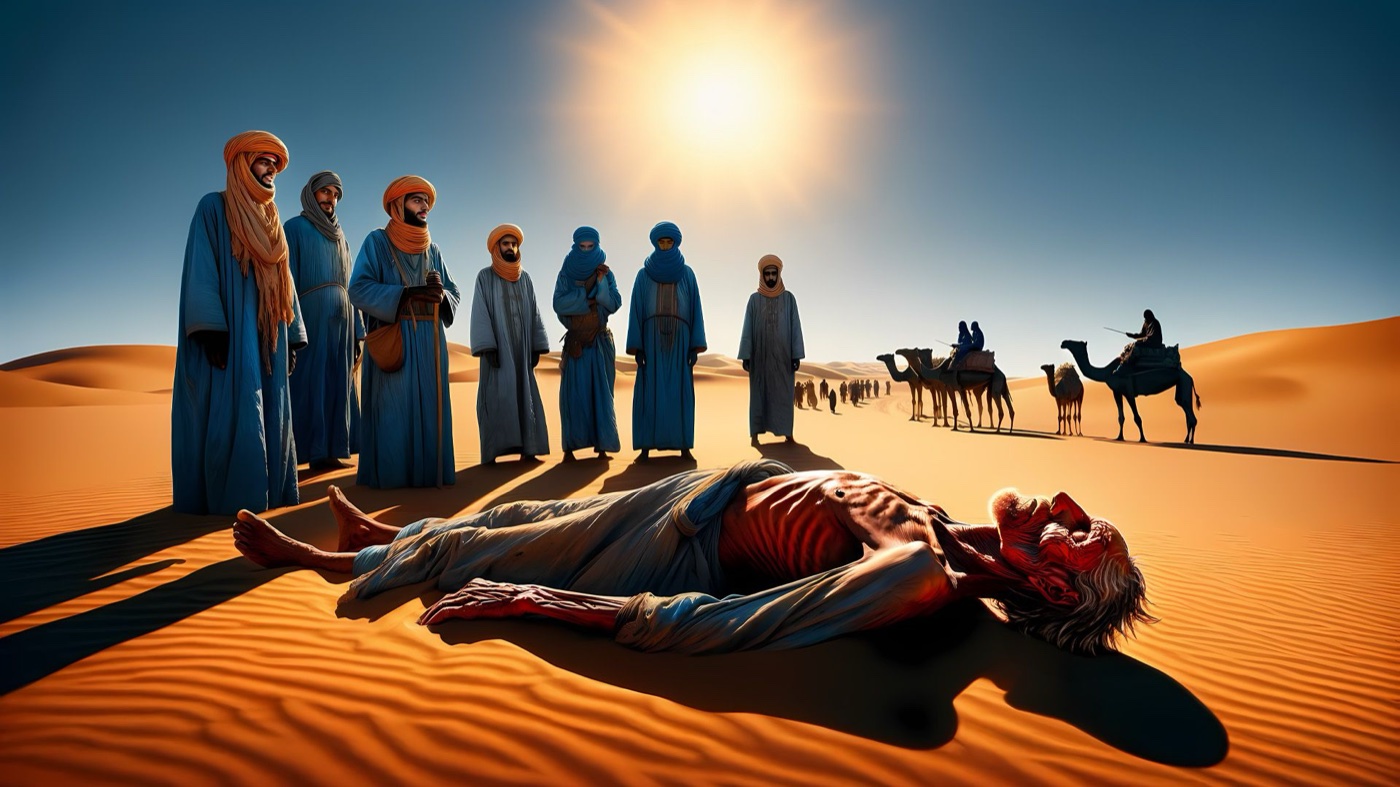
Time is our ultimate tyrant. Due to the ever-increasing entropy in our universe, and in adherence to the second law of thermodynamics, the scarcity of time is a shared reality that limits each and every one of us. As individuals, we are constrained by the limited amount of time allotted to us in our lifespan. Collectively, this asymmetry of time manifests in our universally limited capacity to provide goods and services to each other.
We liberate ourselves from the tyranny of time through innovation and by enhancing our productivity: the art of achieving the best results within our limited timeframe. As a society, we try to counteract our time scarcity by engaging in mutually beneficial trade relationships and heightening productivity on both ends.
Throughout history, in our trading activities, we needed a way to represent time on both sides of a transaction to agree on the value of a commodity. Money is a metaphor for the value of our time. The scarcer the money, the closer it aligns with the scarcity of our time. Scarcity is a measure of time, and time is a measure of value. The only requirement is that the money we use acts as a universal standard of time. It should be equally scarce for everyone.
A perfect way to illustrate this would be to use an example:
Alice verkoopt een paar schoenen aan Bob. Het kost Alice 2 maanden om een paar schoenen te produceren.
Bob heeft geen idee hoe hij schoenen produceert. Hij schat dat het hem 10 maanden zou kosten om te produceren.
Een stuk goud van 1 gram kost zowel Bob en Alice 5 maanden om te vinden. Ze weten dat het voor hen beiden even schaars is. Goud draagt hier belangrijke informatie: 1 gram goud is een voorstelling voor een specifieke tijd voor beide partijen.
Bob betaalt 1 gram goud aan Alice. Zo doet Bob voordeel bij de ruil: Hij krijgt een paar schoenen die hem 10 maanden zouden kosten om te produceren in ruil voor een stuk goud dat 5 maanden waard is.
Alice is ook blij: ze krijgt een goed dat haar 5 maanden zou kosten om te produceren in ruil voor een paar schoenen voor 2 maanden.
Trade is beneficial for all parties involved. Both Alice and Bob save time compared to a situation with no trade. This transaction creates value, and everyone benefits from each other's differences in knowledge and capacity. Money allows us to gain from the knowledge of others and enhances societal progress as a whole. In 'The Selfish Gene,' Richard Dawkins characterizes money as a token of delayed reciprocal altruism. Few animals can collaborate extensively with non-kin; we manage to do so through money. Money minimizes the need for trust and reduces conflict, acting as a value measure for our time. Before we exchange a good, we evaluate it against a standard measure. Instead of having a fixed length, this measure should represent a fixed scarcity that applies to everyone.
Trade connects us in economic networks that boost our productivity through comparative advantages: a diversity of skills, experience, and knowledge that are naturally distributed among us. By trading with each other, we can focus on our comparative advantages and specialize in specific activities. The extreme specialization of our labor allows us to produce the same quantity of goods in less time, or to produce more within the same time. These time savings can either be used as leisure time, or we can utilize the extra time for further innovation. In the latter case, a positive self-reinforcing cycle emerges, which we refer to as the process of our civilization.
Figure 2: A Self-Reinforcing Cycle of Time Savings and Innovation, or 'The Process of Civilization'.
Money is nothing more than a technology that allows us to quantify these time savings (as a standard of value) and transfer them across time (as a store of value) and space (as a medium of exchange). In this way, money acts as a storage medium for the time savings we achieve through specialization and trade. It crystallizes our time, while simultaneously making it liquid again. ## The Functions of Money
Our contemporary society is overly fixated on money, primarily viewing it as a means of exchange. Granted, our present currency fulfills this function much more effectively than its predecessor; gold. During the 20th century, nations managed to monopolize the issuance of money, resulting in a dramatic decrease in its role as a store of value. This led to the misperception that money is used exclusively for exchange purposes. Many prominent economists have stated that Bitcoin can't possibly function as money because its price is too volatile to act as a medium of exchange. However, this is putting the cart before the horse. Money has always evolved in stages, where the role of a store of value predates its function as a medium of exchange. William Stanley Jevons, the pioneer of the marginal revolution in economics, explained:
"Historically, gold first appeared to serve decorative purposes. Secondly, it symbolized wealth. Thirdly, it functioned as a medium of exchange, and finally, it played a role as a unit of account."
In more familiar terms, money always evolves through these four stages:
Verzamelobject: in een eerste fase van zijn evolutie wordt geld gevraagd enkel en alleen omwille van zijn opmerkelijke kenmerken. Schelpen, kralen en goud waren eerst verzamelobjecten vooraleer ze gingen voldoen aan andere functies van geld.
Oppotmiddel: eenmaal een goed door voldoende mensen gegeerd wordt omwille van zijn opmerkelijke kenmerken zal het aanvaard worden als een manier om waarde te behouden doorheen de tijd. Wanneer een bepaald goed gevraagd wordt als oppotmiddel bij een breder publiek zal de koopkracht van dat goed stijgen. Méér en méér mensen willen het aanhouden precies om die rol te vervullen. De koopkracht van een oppotmiddel zal uiteindelijk afvlakken wanneer het breed verspreid is en de instroom van nieuwe mensen afvlakt.
Ruilmiddel: wanneer een goed wijd verspreid is, zal de koopkracht van dat goed stabiliseren. Eens dit gebeurt dan zakt de opportuniteitskost om het te gebruiken in handel. Het kan vervolgens een rol als ruilmiddel beginnen vervullen. De man die vroeger 10000 bitcoins betaalde voor 2 pizza’s illustreert deze hoge opportuniteitskost. Deze pizza’s zijn vandaag ongeveer 90 miljoen euro waard.
Rekeneenheid: als een goed universeel geaccepteerd wordt als ruilmiddel worden goederen en diensten geprijsd in dat goed. Vandaag worden goederen geprijsd in dollar’s en euro’s. Vervolgens wordt door handelaars omgerekend hoeveel iets kost in bitcoin. Pas wanneer handelaars voor hun goederen bitcoin accepteren zonder daarbij naar de koers van bitcoin versus euro kijken, kunnen we spreken van een echte Bitcoin-standaard.
Throughout our history, we've employed a diverse range of forms of money. We've used beads, chains, salt, livestock, bronze, stones, silver, gold, and paper. Many kinds of goods have the potential to fulfill the four primary functions of money. However, as each generation has discovered, certain goods serve better as money than others. These goods possess specific attributes that enable them to perform the functions we expect of money more effectively. ## De kenmerken van geld
The Characteristics of Money
Charles Darwin's theory of evolution through natural selection proposes that certain organisms are more likely to survive, reproduce, and pass on their genes if they possess specific traits that allow them to adapt to their environment better than other members of their species. Money is no different. Every form of currency possesses specific characteristics that make it more (or less) capable of survival, fulfilling the roles of a collectible, a store of value, a medium of exchange, and a unit of account.
Bitcoin is a revolutionary form of currency that boasts superior features compared to its predecessors. Still, it is also a thriving, ever-evolving organism.
"It lives and breathes on the internet. It lives because it can pay people to keep it alive. It thrives because it provides a valuable service that people are willing to pay for. It exists because anyone, anywhere, can operate a copy of its source code. It flourishes because all active copies are constantly communicating with each other. It endures because it is radically transparent: everyone can view the source code and see exactly what it's doing. You can't alter it. You can't debate with it. You can't tamper with it. You can't stop it. You can't even interrupt it. Even if a nuclear war were to wipe out half the planet, it would continue to live on, uncorrupted." - Ralph Merkle
The foundational code of Bitcoin was deliberately designed and has been integral to the system since its inception. This "DNA" of Bitcoin was meticulously coded by Satoshi Nakamoto. Satoshi introduced a new kind of asset which could be traded online, intending it to be the finest form of currency the world has ever seen. This metaphorical DNA of Bitcoin is essentially a set of instructions coded to drive the operational and coordination mechanisms of this unique "organism". These instructions, or "genes", are manifested as different features or characteristics that may or may not be visible. In the following sections, we'll delve into each of these features and draw comparisons between traditional fiat currencies, gold, and Bitcoin in terms of these different characteristics.
[Characteristics-of-Money—Table] Table 1: Comparing the Characteristics of Money - a comparison between fiat currency, gold, and Bitcoin. ### Verifieerbaar
The authenticity of both gold and our current fiat money can be relatively easily verified. However, despite bills being made using advanced technology to prevent counterfeiting, governments and citizens continue to grapple with counterfeiters and fake notes. Similarly, gold is not immune to counterfeiting. Criminals have managed to dupe unsuspecting customers by selling fake gold in the market.
This stands in stark contrast to Bitcoin, whose authenticity can be verified almost instantly and with mathematical certainty. The ease with which the legitimacy of this currency can be confirmed makes Bitcoin the clear leader in this area. ### Fungibel
Gold is the undisputed champion when it comes to fungibility or interchangeability. This refers to the degree at which various units of money are regarded as equivalent. Gold can always be melted down and recast, effectively making it identical to any other amount of gold. In contrast, fiat money is only as fungible as its issuer dictates. While different types of banknotes are generally accepted by everyone, governments can unilaterally choose to discontinue certain bills. For instance, the Indian government abruptly decided one day to no longer accept 500 and 1000 rupee notes, citing their alleged role in the underground economy as the sole reason. Nowadays, some institutions are considering eliminating larger cash denominations, to more easily implement negative interest rates in response to future economic crises.
Bitcoin exhibits perfect fungibility at the network level. Every bitcoin is treated identically. However, since every transaction is permanently recorded on the blockchain, it's possible that certain bitcoins may be valued differently by third parties in the future. For instance, bitcoins associated with a history of criminal activity may be rejected by merchants or exchange offices. ### Transfereerbaar
Bitcoins are incredibly easy to transfer. A USB stick could hold the keys to billions of euros and be taken just about anywhere. A transaction can instantaneously send that same amount of bitcoins to a new owner on the other side of the planet.
Meanwhile, fiat money has predominantly become digital, thus making it easily transferrable. This was a significant advantage over gold, leading to its dethronement as the universally accepted medium of exchange. However, governments can easily restrict the free flow of capital and censor transactions in fiat money. Cash serves as an alternative, but it is less convenient to transfer, especially considering the risks of storage and the costs of transportation.
Lastly, gold is the least transferable. Typically, gold is kept in a secure, fixed location, and ownership titles are altered at transfer, rather than physically relocating the gold. The shipment of physical gold is tremendously expensive and often time-consuming. The centralization of gold reserves also played a significant role in the failure of gold as a currency in the 20th century. ### Duurzaam
When it comes to sustainability, gold is once again the clear winner. Gold is never lost. Virtually all the gold that has ever been mined or minted, including the gold of the Egyptian Pharaohs, remains available as an above-ground supply and will continue to be available for many thousands of years to come.
Fiat currency and bitcoins essentially exist as digital accounting entries that can take on physical manifestations (such as banknotes, a QR code, or USB sticks). Therefore, we should not focus on the durability of their physical form, but rather, the stability of the issuing authority.
Throughout history, countless instances of fiat currency have been introduced by governments and institutions that come and go. When a government falls, their imposed currency often disappears as well. For instance, the Papiermark, Reichsmark, or Rentenmark from the Weimar Republic have lost all value due to the disappearance of their issuing bodies. If history serves as a guide, it's unwise to view fiat money as a long-term, sustainable option. The average lifespan of a fiat currency is estimated at 27 years. The U.S. dollar and British pound, with their extended lifecycles, are notable exceptions to this rule.
Finally, we can deem bitcoins, which are mined without a central issuer, as sustainable as long as the network that controls their issuance remains functional. It's too early to make definitive conclusions, but in its first decade, the network has already demonstrated a high degree of anti-fragility. The decentralized nature of the network appears to make it stronger over time. ### Deelbaar
For use in daily trade, units need to be sufficiently divisible. Bitcoins can be divided down to one hundred millionth of a full unit and can be traded over the network in such quantities. The only limiting factor here is the network fee that must be paid to make transactions on the network. If these transaction fees increase, it may become uneconomical to send small amounts.
Fiat money can be divided down to the smallest available cent. This is clearly a considerable advantage over gold. In our current trade, fiat money possesses an ample degree of divisibility.
Gold has a very high value per weight. While this can be considered a strength, it's also simultaneously a weakness. This characteristic makes it far from ideal as a form of payment for small transactions such as purchases at the bakery or the store. Traditionally, silver stepped in to fulfill this role. ### Schaarste
A key advantage of Bitcoin over traditional fiat money and gold is its scarcity. The Bitcoin network is designed such that no more than 21 million units can ever be mined. The exact quantity, however, isn't the critical point. What's crucial is that the number (in this case, 21 million) is fixed. Hence, a Bitcoin owner can have absolute certainty about their stake in the total potential supply. For instance, anyone who holds keys to a full Bitcoin knows that at most, only 21 million people on our planet (less than 0.3% of our global population) can own an equal amount.
Although gold has remained relatively scarce throughout history, it has not been entirely resistant to supply increases. Should a new gold mining method or technology become economically viable or appealing, either due to an invention or a surge in gold prices, the supply could drastically increase. For instance, gold could potentially be mined from the ocean floor or outer space, which would result in an enhanced overall gold supply.
Finally, there's fiat money. This relatively recent innovation in currency has so far proven to be very susceptible to a constant increase in its supply. Nation-states continually inflate their money supply to address short-term political issues. The inflationary tendencies of governments worldwide mean that owners of fiat money should expect the purchasing power of their savings to diminish over time. ### Gevestigde geschiedenis
No form of currency shares the same history as gold. It has been prized by people since the dawn of our civilization. Coins minted in ancient times still hold considerable value today. The same cannot be said for fiat money, which is a relatively recent phenomenon.
Since its inception, fiat money has shown a tendency to rapidly lose value in practically every part of the world. Governments have utilized inflation as a stealthy means of taxing their citizens, often without the public's immediate awareness. This strategy proved too tempting for dictators and rulers to resist. The 20th century clearly demonstrated that fiat money cannot be relied upon to maintain its value over the medium to long term.
Despite its relatively brief existence, Bitcoin has thus far demonstrated remarkable resilience against attacks and setbacks. While the currency has been pronounced dead countless times, these declarations have always proven to be premature, and the network simply continues. Moreover, the Lindy Effect suggests that the longer Bitcoin survives, the greater the confidence that it will endure for a significant period. Society's confidence in a new monetary asset tends to rise asymptotically, as depicted below:
Figure 1: The Lindy Effect (Source: Boyapati, 2017)
If Bitcoin succeeds in reaching its 20th year (only nine years to go), there will be a near-universal confidence in the permanency of this technology in our lives. After all, who these days still believes that the internet will disappear again? ### Censuur-resistent
A significant factor contributing to the initial demand for bitcoins was their use in illegal drug trafficking. Many commenters mistakenly inferred that the primary demand for bitcoins stemmed from their anonymity. However, the Bitcoin network is far from anonymous. Every transaction is permanently recorded in a public ledger - a comprehensive historical list that allows for in-depth analysis to track its origin.
Indeed, it's true that a sufficiently tech-savvy and cautious individual may be able to conceal their identity when using Bitcoin. However, this isn't the primary reason why this digital currency garnered popularity among drug users and dealers. The primary attribute making Bitcoin useful for these activities is its permissionless nature at the network level. You don't need to seek anyone's approval to make a transaction. When the digital coins are transferred, there's no human intermediary deciding whether the transaction should be allowed or not. Bitcoin, as a decentralized peer-to-peer network, is naturally designed to be resistant to censorship. This contrasts sharply with the traditional fiat banking system, where banks and other gatekeepers are regulated by governments and compelled to report and prevent suspicious transactions. A classic example of regulated money transmissions are capital controls. For instance, it could prove quite challenging for a millionaire trying to escape an oppressive regime to transfer their assets to a safer new domicile.
Although gold isn't issued by a central authority, its physical nature makes it difficult to move around. Consequently, it's more susceptible to government regulation than Bitcoin. ### Onvervalsbare kostbaarheid
Another crucial characteristic that money must have to be chosen in a free market is a so-called unforgeable costliness. An object may be considered valuable because of 1) its original cost (for instance, the cost to mine gold from the ground) or 2) the improbability of its history (like art). Moreover, this value should also be difficult to counterfeit. In Bitcoin's case, the Proof of Work requirement for minting new units ensures that the production cost is closely aligned with the price on online exchanges (more on this in future articles). ### Programmeerbaar
Bitcoin is an open-source computer protocol with a public source code that is visible and accessible to everyone. It can be utilized anytime and anywhere by anyone who desires to do so. Software developers have complete freedom to build applications on top of the Bitcoin protocol without needing permission from any central authority. ### Decentraal
Decentralization simply means that there's no oversight by a central authority. In the Bitcoin network, no one can be denied or excluded. Moreover, decentralization gives any entity within the network the ability to evade coercion. Coercion isn't necessarily violence. It also involves negative incentives to manipulate people according to the perspective of an authority figure. A decentralized nature is a crucial characteristic for money because any form of central authority can threaten every other attribute (mainly scarcity and censorship resistance).
Decentralization is also essential because it promotes greater social scalability. Human collaboration naturally gravitates towards centralization and hierarchy. By utilizing decentralized currency, we circumvent this issue. The need for trust has always been a limiting factor in our social organizations upon which our society is built. Our money occupies a significant position in this, a fact too often overlooked in public discourse.
The Natural Selection of Money
Every new form of currency must be capable of competing with its predecessor in every aspect, and it may need to surpass it in some aspects to gain acceptance. When gold started circulating as currency, the creators and owners of beads - a former medium of exchange - likely tried to convince everyone that this yellow metal was no substitute for their well-known beads. However, gold possessed superior attributes that made it more resilient as a currency, enabling it to fulfill the functions of money more effectively. It didn't matter what anyone thought; gold was destined to be a better form of currency than beads or shells.
Our history shows that natural selection unfolded independently in various locations. Gold played a significant role in the civilization of the Mayans some 4000 years ago, in societies on the Indian subcontinent around 2000 years ago, and among the Egyptian pharaohs approximately 5000 years ago. All these groups of people revered gold, valued it, and viewed it as a symbol of wealth. It's important to note that this selection of gold as currency was not imposed by any superior power. Gold gained its worth mainly due to its physical characteristics, and it was voluntarily chosen by people as a store of value, a medium of exchange, and a unit of account. The Mayans, Egyptians, and Indians had no connection with each other- they formed their ideas completely independently. The natural selection of gold was solely triggered by the chemical properties (the sort of "genetic code") of our most esteemed precious metal.
With its abundant monetary characteristics, gold naturally emerged as the money of choice in the free market, often referred to as hard money. The inherent scarcity of this precious metal, coupled with the challenge of producing more, made it closely align with our own finite temporal resource. Gold was our most effective means of transferring value through time. This yellow metal ranked as one of the most difficult and expensive resources to extract from the earth's crust, making it the perfect store for our hard-earned savings. Gold's supply was resilient to change. It required time and energy to mine new gold. This relative difficulty in producing new monetary units determined the hardness of a currency.
We can define this solidity or hardness of gold using the so-called ‘stock-to-flow’ ratio. The 'stock' is nothing more than the existing above-ground supply of gold present on this planet. Gold is never consumed; all the gold that has ever been mined still exists physically in some form or another and is readily available today. As such, gold has an exceptionally high stock. The ‘flow’, on the other hand, refers to the amount of new gold that can be mined in a year. The ratio between the 'stock' and the 'flow' serves as a good measure of the stability or 'hardness' of a particular resource when it is used as currency.
When people choose to use hard currency with a high stock-to-flow ratio as a store of value, the price of that commodity increases. This increased price is due to everybody wanting to retain a stockpile of that commodity. As a result of the rising prices, producers begin to manufacture more of that commodity. However, since the annual flow is minute compared to the existing stock, even a significant surge in new production won't cause the commodity's price to plummet. On the other hand, when people opt to store their wealth in soft currency with a low stock-to-flow ratio, it's relatively simple for producers to introduce large quantities of that commodity on the market. This phenomenon causes the commodity to depreciate in value, thereby robbing savers of their wealth (to the benefit of the producers). A commodity with a low stock-to-flow ratio cannot be a good store of value.
For a commodity to be successful as money, it must have a natural or artificial mechanism that restricts its new production. This way, the value of the commodity is preserved over time, making it a reliable store of wealth. A commodity can only fulfill a monetary role if it is costly to produce, in terms of both time and energy. Without this mechanism, there will always be a temptation to produce cheap new money, which would destroy the accumulated wealth of the savers. In such a situation, there would be no incentive to save in that form of money.
Compared to other monetary technologies like silver or copper, gold has a higher stock-to-flow ratio, making it much more resilient to depreciation than other modes of exchange. An item cannot become an effective store of value unless it has a high stock-to-flow ratio; it needs to increase in value when its demand as a store of value grows and its production must be limited to prevent an influx in supply from pushing the price back down. Gold has consistently proven to be the best candidate for this.
[Stock-to-Flow] Figure 2: The stock-to-flow ratios of various commodities (Source: Ammous, 2018)
In 2009, Satoshi Nakamoto introduced a new asset that could potentially take the role of money. The total quantity of bitcoins is pre-determined and cannot be altered, regardless of the amount of effort and energy invested into the proof-of-work system. This is achieved through the issuance schedule of new bitcoins and a process known as difficulty adjustment - perhaps one of the most ingenious aspects of Bitcoin's design. If more people opt to hold onto their bitcoins, it drives up their market value, making the mining of new bitcoins more profitable. This would encourage miners to devote more resources to solving proof-of-work challenges. More miners mean more computational power, which could potentially speed up the resolution of proof-of-work puzzles and accelerate the issuance rate of new bitcoins. However, if the computing power increases, the complexity of the mathematical puzzles needed to unlock the mining reward also increases to ensure that the time taken to produce a new block remains approximately 10 minutes. This way, the release of new bitcoins is constricted to the original issuance schedule, resulting in a halving of the number of new bitcoins hitting the market approximately every four years. Bitcoin's revolutionary aspect is not the blockchain itself but rather the synergy of the proof-of-work process and the difficulty adjustment, both of which bring the concept of absolute scarcity to the digital world.
[btcemission] Figure 3: Schedule for the issuance of new bitcoins (Source: @bashco_)
The difficulty adjustment mechanism is arguably the most reliable technology for generating 'hard' money and regulating the growth of the stock-to-flow ratio, making Bitcoin fundamentally different from any other type of money. When the value of other forms of money increases, more resources are allocated to increase production, and consequently, the total available quantity. However, with Bitcoin, allocating more resources does not result in the production of more bitcoins. Instead, it necessitates increased computational power to validate Bitcoin transactions, thereby bolstering the network's security and fortifying it against potential threats. Bitcoin represents the hardest form of money ever conceived. An upsurge in Bitcoin's value can never cause an increase in its total amount; it can only serve to enhance the network's security and make it impervious to attacks.
Figure 4: Stock-to-flow ratios of various commodities (Source: Ammous, 2018) ## The Path to Monetization
We can analyze this natural selection of gold as currency through the lens of game theory. Game theory is a study of rational or strategic behavior across different scenarios. It can be applied to situations where individuals must decide whether to collaborate or compete. Hence, the price of gold is determined through a game theoretical approach: each market participant values the commodity based on their estimate of how other participants will value it.
During the process of monetization, the purchasing power of a monetary asset rapidly escalates. Many observe that this gives the illusion of a bubble, insinuating that assets like Bitcoin or gold are grossly overvalued. However, this assumption is incorrect. Inherent to all monetary goods is the fact that their purchasing power far exceeds what may be anticipated based solely on their utility value. The difference between the purchasing power of a monetary asset and its value derived from intrinsic utility can be thought of as a 'monetary premium.' As a monetary good transitions through various stages of monetization, its monetary premium escalates.
Figure 5: Monetary Premium of Various Monetary Media (Source: Boyapati, 2017)
The process of monetization is, therefore, game-theoretic; every market participant attempts to preempt the aggregate demand from other participants, and thus the future monetary premium of the asset. Since the monetary premium is not anchored to an inherent usage value of the asset, participants can only rely on historical prices to determine whether a currency is 'cheap' or 'expensive'. The connection between the prevailing demand and historical prices is known as 'path-dependency'.
The point is, the concepts of 'cheap' or 'expensive' are essentially meaningless when it comes to monetary goods. Their price is not a reflection of a stream of dividends or of a use value, but rather how widely the good has been accepted to fulfill the various roles of money. Furthermore, market participants are not merely observers. They not only strive to buy and sell in anticipation of the expected future monetary premium but also actively promote the superior characteristics of the monetary good due to the fact there is no objectively 'correct' monetary premium. This often results in a sort of religious belief surrounding money.
Religion, as we recognize, is a narrative we share and accept. Think of religion as an adoption curve—it's nearly perfect. Once someone 'joins the church', they begin to proselytize. And when others come on board, they too start spreading the word. - Leigh Drogen
While this comparison to religion may be mistaken for some kind of irrational belief, it's perfectly logical for individuals to speak about the superior attributes of a type of money. Furthermore, it's also rational for society as a whole to converge on a single standard. Money is the fundamental building block of all our trade, and adopting a superior form of money has tremendous benefits for all members of society.
Like all monetary assets, Bitcoin and gold carry a monetary premium because of their durability. This premium is the reason behind the often-heard criticism that Bitcoin is a 'bubble'. All monetary assets carry a monetary premium. This premium, which is a price higher than what can be justified by the asset's utility value, is the most distinguishing feature of all types of money. In other words, money is always and forever a bubble. Paradoxically, a monetary asset can simultaneously be a bubble and be undervalued when it's in an early stage of adoption.
In this article, we've evaluated the characteristics that make a commodity chosen as money in a free market. Throughout our history, gold was selected by many as the best form of money. This occurred independently across various corners of the globe, driven solely by the chemical attributes of this 'useless yellow rock'. However, in the twentieth century, gold failed as money and fiat currency assumed its role. Yet, this shift wasn't facilitated by the free market, and fiat money is far from being scarce. Intuitively, we grasp this concept and attempt to preserve our wealth over time through other mediums such as real estate, stocks, or art. The discovery of absolute digital scarcity presents us with a superior alternative for money.
I have no doubt that the natural selection of currency will continue, with society converging towards a new standard of value: Bitcoin. In a forthcoming article, I plan to discuss the end of gold as a form of money. Additionally, I aim to explain why fiat money is unethical and contributes towards an uneven distribution of resources within our society.
Boyapati, V. (2017) - The Bullish Case for Bitcoin
Held, D. (2018) - Planting Bitcoin
Ammous, S. (2018) - The Bitcoin Standard.
Szabo Nick (2002): Shelling Out - The Origins of Money
Breedlove (2019) - Bitcoin and the Tyranny of Time Scarcity
Acrual (2019) - Money and Time